

High-Functioning Anxiety Therapy for Lasting Relief
Online therapy for adults in Austin, TX, and throughout the state of Texas.
Is Persistent Worry Holding You Back from Achieving Your Best?
Are you exhausted by relentless thoughts that never turn off?

Do you replay conversations long after they end?
Do you imagine worst-case scenarios before anything has even happened?
High-functioning anxiety can be hard to spot. From the outside, you may look calm, capable, and successful. You get things done. You show up for work. You care deeply about your relationships. But inside, your body reacts to racing thoughts that are loud and restless.
You may live with constant worry. Small problems quickly turn into big fears. A simple mistake feels like proof that something is wrong with you. You might catastrophize, imagining the worst possible outcome, and freeze with fear. Intrusive thoughts pop up out of nowhere and refuse to leave. There is a steady sense of dread or apprehension, even on ordinary days.

Anxiety can also impact your relationships. You may overthink texts. You might seek reassurance again and again, needing to hear that everything is okay. Or you avoid hard conversations because conflict feels overwhelming. Perfectionism can creep in, making you believe you must get everything right to feel safe or accepted.
Over time, this pattern is exhausting. You may be tired of living in your head. Tired of bracing for something to go wrong. Tired of feeling “on edge” in your own life.
Most people who reach out for therapy want one thing: relief. They want steadiness. They want to feel calm in their bodies and secure in their relationships.
Through counseling, you can discover ways to calm the incessant worry and regain confidence and connection.
You’re Not Alone — High-Functioning Anxiety Is More Common Than You Think
If you experience constant worry, overthinking, or a need to get everything “just right,” you're not alone. High-functioning anxiety can look like staying busy, taking on more responsibilities than you can manage, or overachieving — while quietly struggling with inner stress, self-doubt, or perfectionism. You’re not the only one navigating life this way.
How Anxiety Develops
Anxiety often begins in childhood, with early experiences influencing how the nervous system reacts to stress. Growing up in unpredictable or unsafe environments can lead to hyper-vigilance to avoid conflict. If love or approval were linked to achievement, one might equate perfection with safety.

Even after childhood stress or trauma, the brain remains on high alert for danger, even when it no longer exists. This can show up as intrusive thoughts, catastrophizing, overthinking, or avoidance — all ways your mind tries to protect you. Over time, these patterns can make daily life exhausting, even if everything “looks fine” on the surface.
These characteristics are not weaknesses or failings. They’re adaptations.
The good news is that these patterns can change. Many adults seek therapy because they are tired of living in survival mode. With therapy, you can learn how to calm your nervous system, reframe anxious thoughts, and strengthen your ability to connect with yourself and others. You don’t have to carry this alone — support can help you feel grounded, more secure, and more in control of your life and relationships.
Learn How To Calm Your Mind And Feel Steady Again
High-functioning anxiety can make you feel stuck in your own thoughts. You may be tired of constantly dwelling, worst-case thinking, and the pressure to always be on the ball. You might look capable on the outside, but feel tense, restless, or overwhelmed inside.
Anxiety therapy can help you move from panic mode to a place of steadiness and control. My goal is not just to talk about anxiety — it’s to teach you real skills you can use in everyday life.
A Practical, Skill-Based Approach
I approach therapy as both a counselor and an educator. That means you won’t just vent in session and hope things change. You will learn tools and practice using them in real-world situations.
I draw from:
Cognitive Behavioral Therapy (CBT): Helps you notice anxious thought patterns like catastrophizing and perfectionism, and replace them with more balanced thinking.
Somatic techniques: Help calm your nervous system so your body does not stay stuck in fight-or-flight mode.
Mindfulness practices: Teach you how to stay present instead of getting pulled into intrusive thoughts or fear about the future.
Together, these approaches help you manage your distress and feel more secure in your relationships. You begin to understand that anxiety is not who you are, and it is treatable.

What To Expect In Sessions
In our first sessions, we will gently explore your history. We’ll look at when anxiety began, how attachment and early experiences shaped it, and how it shows up in your life today. Understanding the root helps us treat it at the source, not just the symptoms.
As therapy continues, you will learn practical strategies to calm racing thoughts, steady your nervous system, and challenge fearful thinking patterns. We will also work on building tolerance for uncertainty and strengthening communication in your relationships. Between sessions, you’ll apply these skills in daily life, and we’ll refine them together.
Anxiety may have convinced you that staying on high alert is the only way to stay safe. But with therapy, you can retrain your nervous system, build more secure attachment patterns, and feel more grounded in your body.
You don’t have to keep living in constant worry. With the right support and practical tools, you can feel steady, capable, and at peace again.
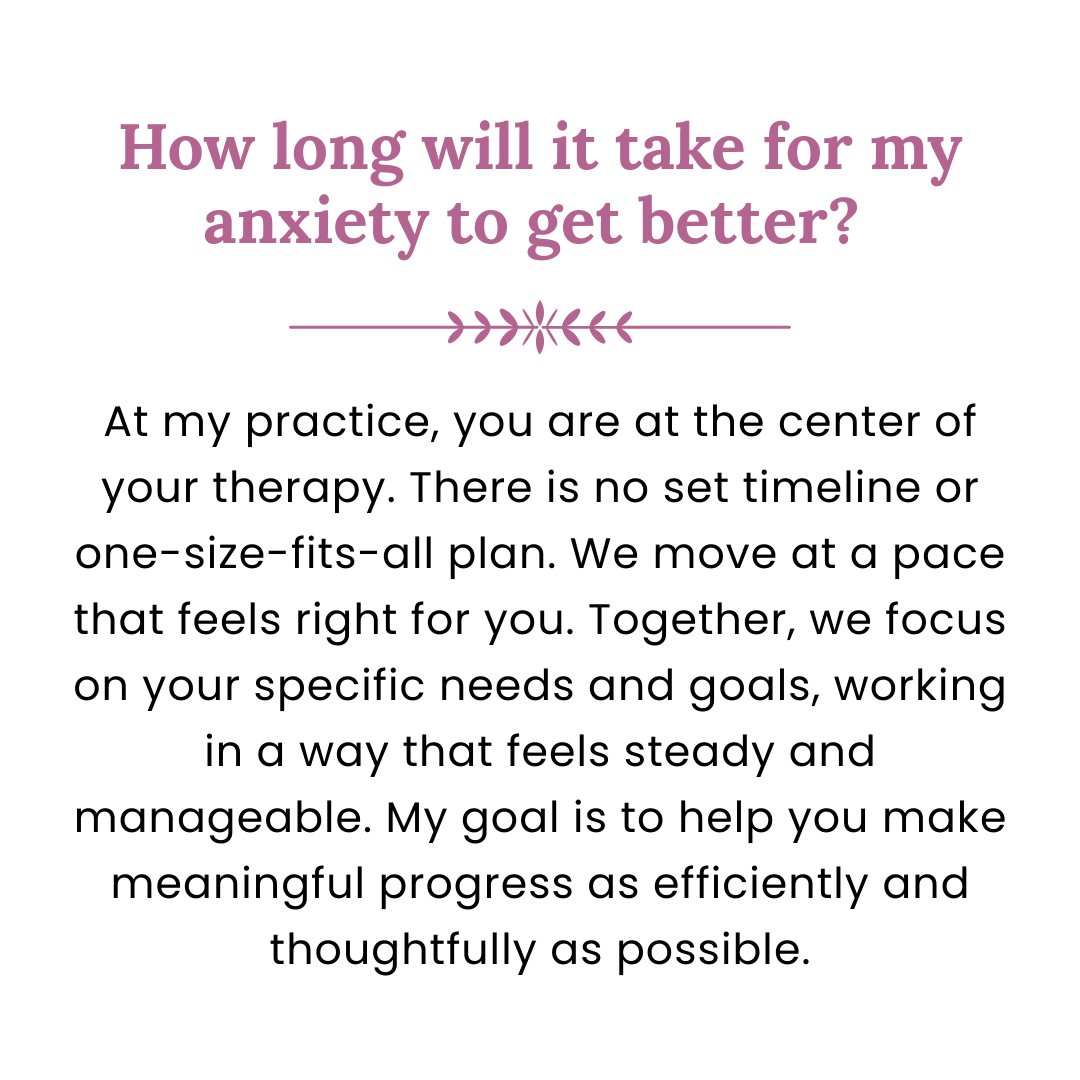
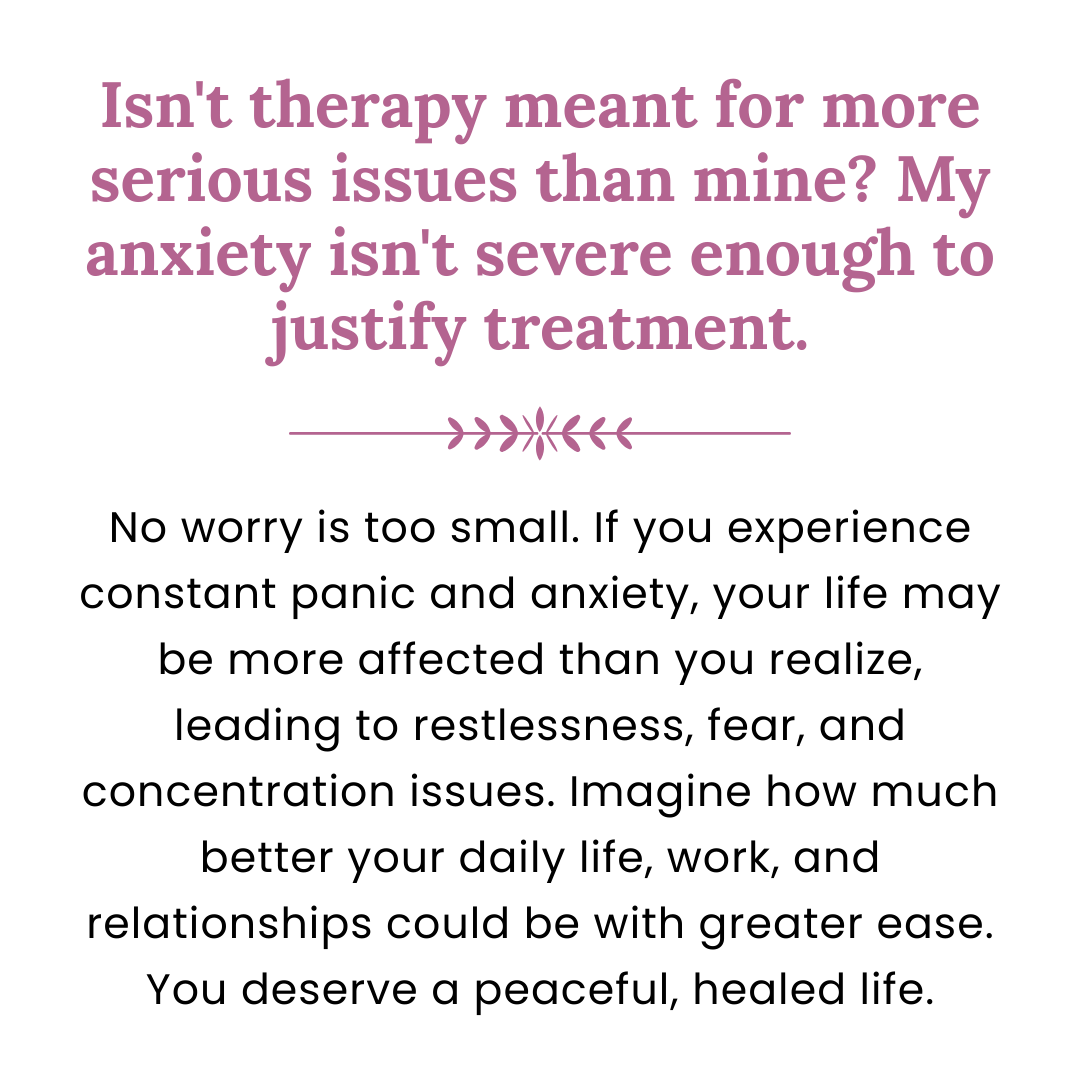
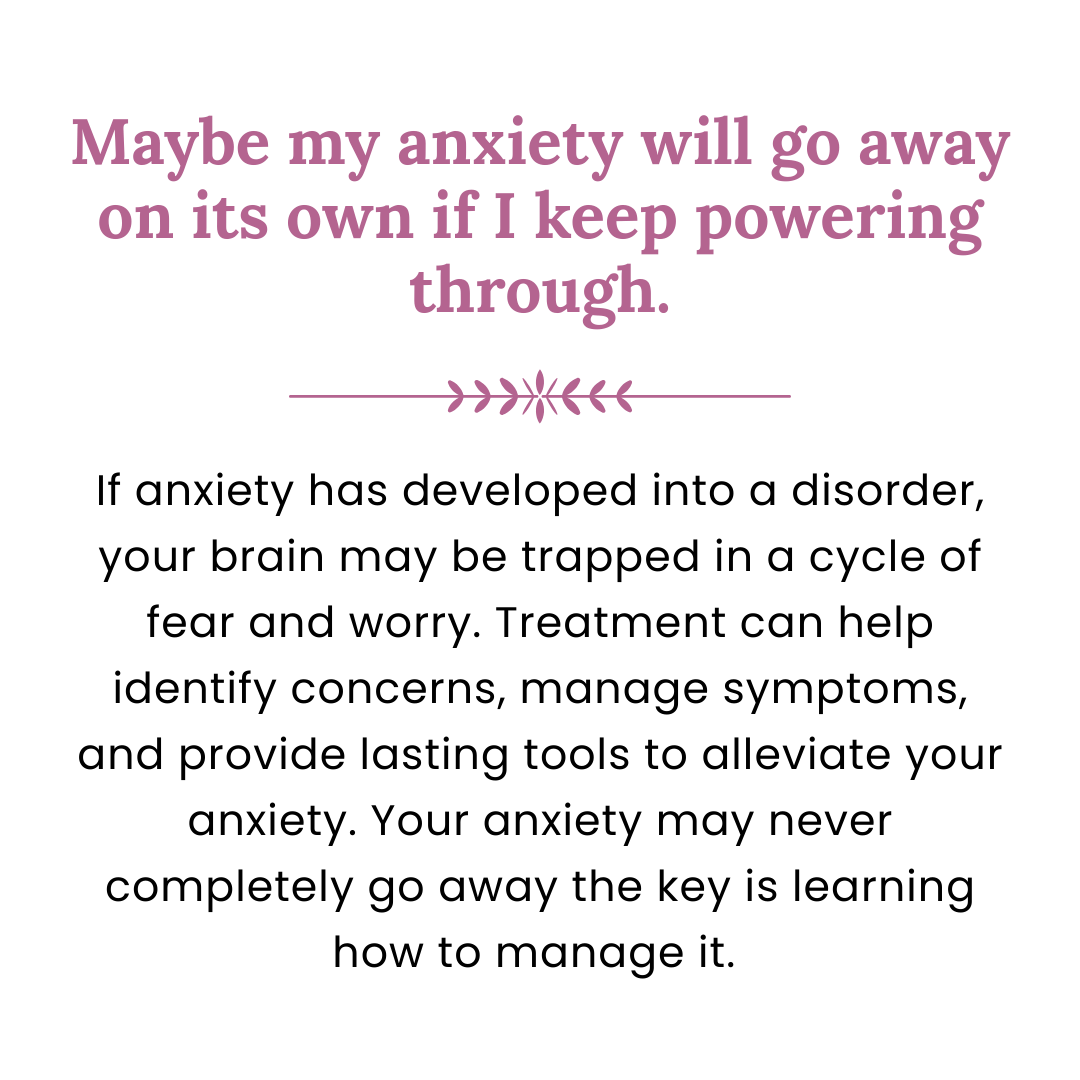
Perhaps You're Curious About Anxiety Therapy But Have Questions...
You have the power to quiet your fears.
If anxiety is hindering your ability to flourish and enjoy life to the fullest, anxiety therapy can assist you in managing and overcoming your concerns. To schedule an appointment or ask questions, contact me at (512) 765-6259. I try to get back to all voicemails and emails within 48 hours.
You can also schedule a free 15-minute consultation.