Outgrowing Who You Used to Be: Signs You’re Entering a New Chapter
by Taylin D. Ramirez
Outgrowing who you used to be can feel confusing, uncomfortable, and even lonely. You may notice that what once fit no longer feels right, even if you can’t explain why. This kind of change doesn’t mean something is wrong with you — it often means you’re growing. Let’s explore what this stage can feel like and how to move through it with more ease and support.
Signs You’re Outgrowing Who You Used to Be
Outgrowing yourself often feels uncomfortable before it feels freeing. Instead of clarity, you may feel unsettled or unsure.
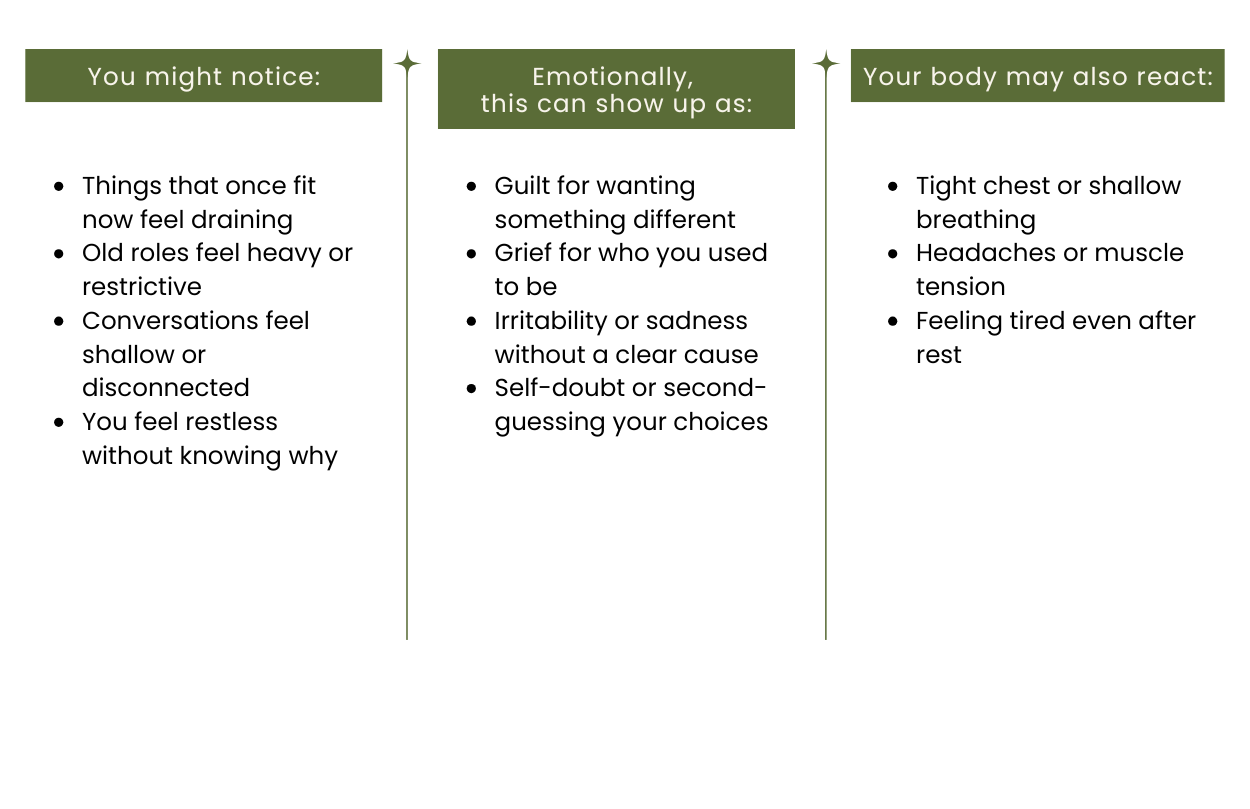
This stage often feels like standing between two versions of yourself — the version that survived and the version that is still forming. Nothing is wrong with you. Your system is adjusting to growth.
Why This Stage Feels So Hard
Even when your old patterns weren’t healthy, they were familiar, and familiar often feels safer than new.
This stage feels hard because:
Letting go means losing certainty
Growth can threaten old relationships
Change may trigger fear of rejection or failure
You may also be grieving:
The version of you that overgave
The version that stayed quiet
The version that pushed through pain to survive
Healing often feels harder before it gets better because your nervous system is learning a new way to exist. If you lived in survival mode, slowing down can feel unsafe.
Growth asks you to pause instead of push, choose differently, and listen to your body. This shift can feel unfamiliar, especially if you’re used to moving through life in survival mode. That can feel exhausting — and it’s still progress.

Something is changing.
Personal growth often begins at the crossroads of who you were and who you’re becoming.
What Helps When You’re Becoming Someone New
You don’t need to rush this process. Growth doesn’t ask you to erase your past — it asks you to integrate it.
Helpful supports during this stage include:
Permission to change without explanation
Gentle grounding practices to calm your nervous system
Space to name what no longer fits
Support while learning to trust yourself again
Remember: Small steps matter!
Choosing what aligns with your values
Listening to your body’s cues
Letting curiosity guide you instead of fear
You don’t need the full picture to take the next step.
How Therapy with Me Can Help
At Emerging Pathways Psychotherapy, therapy is a space where you don’t have to justify your growth. You can explore who you’ve been and who you’re becoming — safely and at your own pace.
I work with adults navigating:
Identity shifts
Burnout and chronic stress
Life transitions and emotional overwhelm
Using trauma-informed and somatic approaches, along with ACT and CBT, therapy focuses on:
Building practical skills like noticing unhelpful thought patterns
Managing overwhelm
Reconnecting with your values
Learning tools that help you feel more grounded and steady during change.
Outgrowing who you used to be is a sign of growth, not failure. You don’t have to navigate this transition alone. If you’re ready for support, I offer online therapy for adults navigating change. Support can help you feel more grounded as you step into this next chapter.